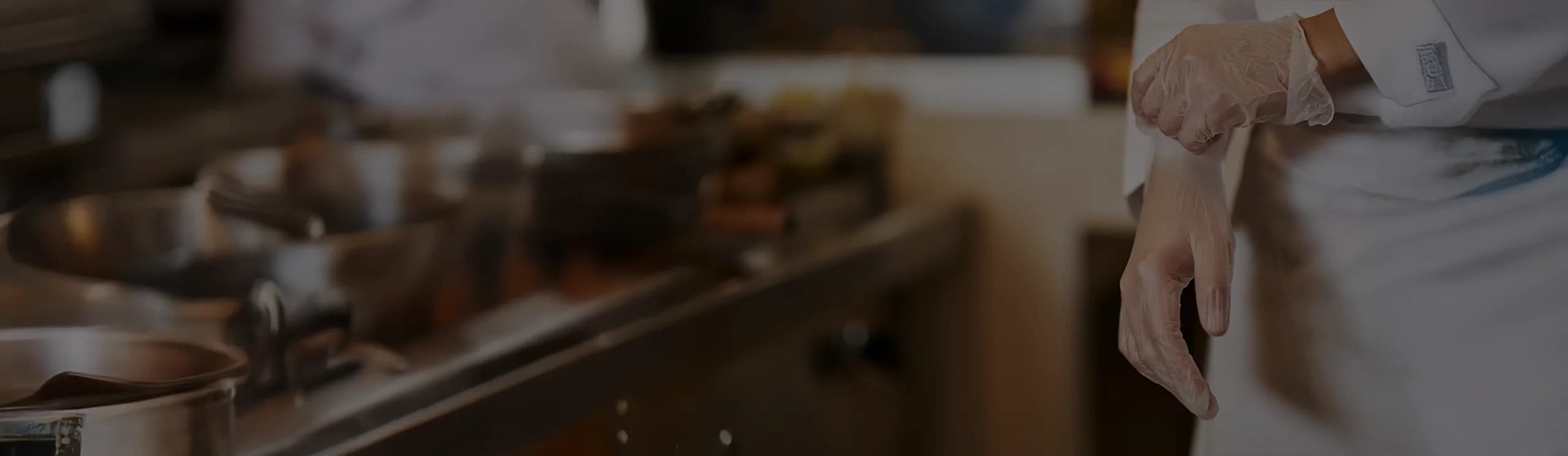
Our Food Safety Policy
From production to delivery, Mizanplus applies the highest food safety standards at every stage.
- ISO 22000:2018
- ISO 9001:2015
- Ministry Registered & Approved
When you order food for delivery, there are three things you can’t see: where the ingredients come from, what the kitchen is like, and how your order is handled on its way to you. In a dine-in restaurant, you can check some of this with your own eyes. With delivery, you can’t. That’s why, in the delivery business, food safety isn’t a marketing line — it is the business.
Below, we walk you through the standards in Mizanplus kitchens step by step — from the moment ingredients leave the supplier to the moment your order reaches your door.

Take a closer look at how food is made in our hygiene-certified kitchens.
Production
Food is produced in kitchens approved by Türkiye's Ministry of Agriculture and Forestry and certified for hygiene. Every stage is supervised by food engineers.
Ingredients
Ingredients come from Ministry-approved, certified suppliers and travel by cold-chain logistics, in vehicles fitted with systems that continuously monitor temperature and hygiene conditions.
Portioning
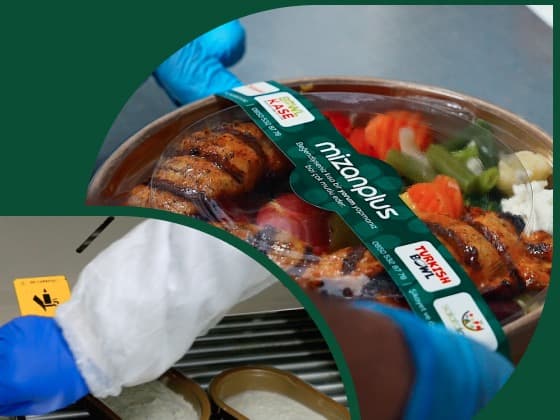
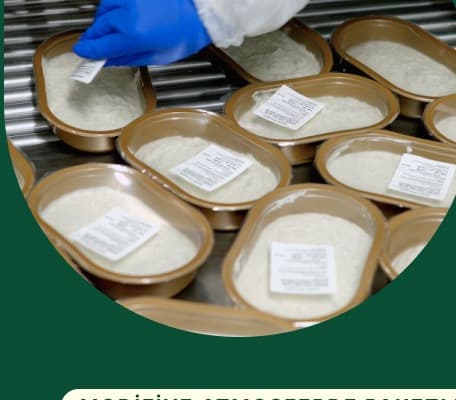
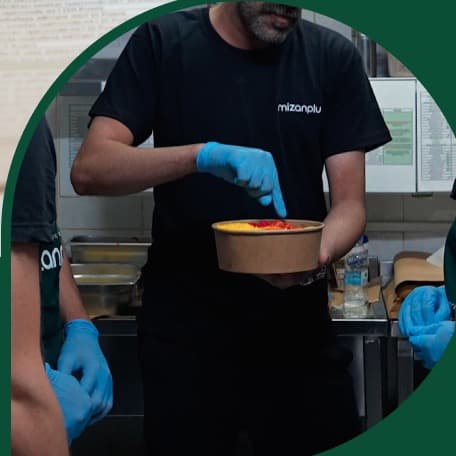
Portioning is hands-free. Food is portioned into BPA-free, heat-resistant containers without being touched by hand, then sealed with leak-proof film.
Audits
Audits work on two levels: internal audit teams and independent inspection bodies regularly review every process.
Training
Our staff train continuously, with regular programs on food safety, hygiene, and customer satisfaction.
Mizanplus is a cloud kitchen operation that runs multiple delivery brands under one roof. Every process, from sourcing and production to packaging, follows defined quality and food safety standards.
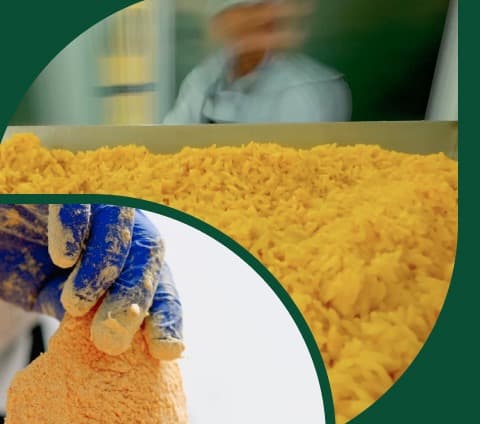
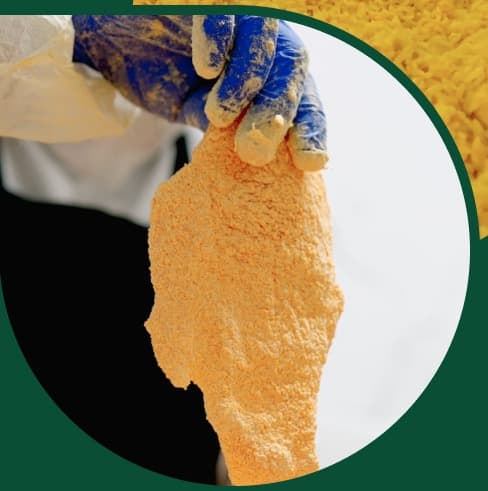
Where Do the Ingredients Come From?
Good food starts with good ingredients, and that is also the first link in food safety. Every ingredient used at Mizanplus comes from suppliers approved by Türkiye’s Ministry of Agriculture and Forestry and holding the relevant certifications. Transparency and sustainability are core principles of our supply chain.
What central sourcing means for you: whichever location you order a brand's dish from, the ingredients come from the same source. That kind of consistency isn't possible when every independent restaurant works with its own suppliers.
How Do Ingredients Reach the Kitchen?
The cold chain is an unbroken system of controls that keeps food within set temperature ranges from the moment it is produced until it is eaten. For meat, poultry, dairy, and ready-meal products in particular, a break at any single point puts the entire product at risk.
At Mizanplus, ingredients reach our kitchens through cold-chain logistics. The vehicles used are fitted with systems that continuously monitor the temperature and hygiene conditions of the products they carry.
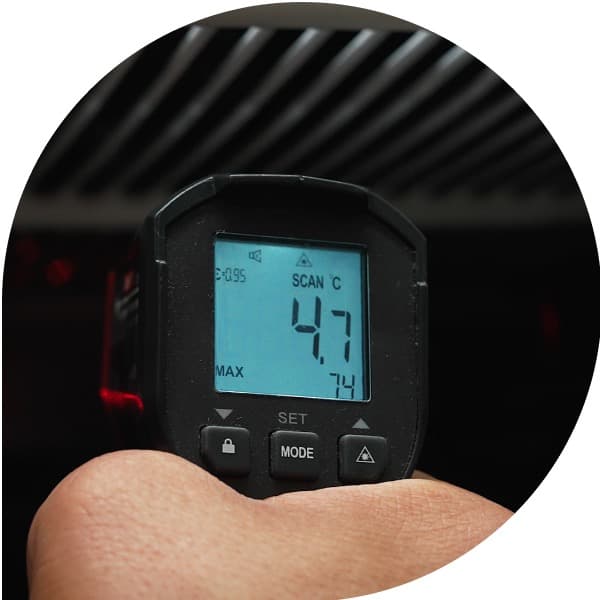
Loading and Unloading
Unloading products from vehicles and preparing them for dispatch is done in a controlled way to minimize temperature loss.
Receiving into Storage
Delivered products go straight into cold storage at the right temperature.
Storage Conditions
Storage areas are laid out to maintain the right temperature and air circulation.
Controlled Thawing
Frozen products are never thawed at room temperature, but under controlled conditions suited to each product group.
Where and How Is the Food Cooked?
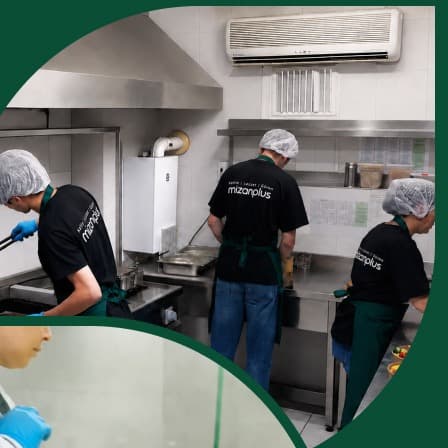
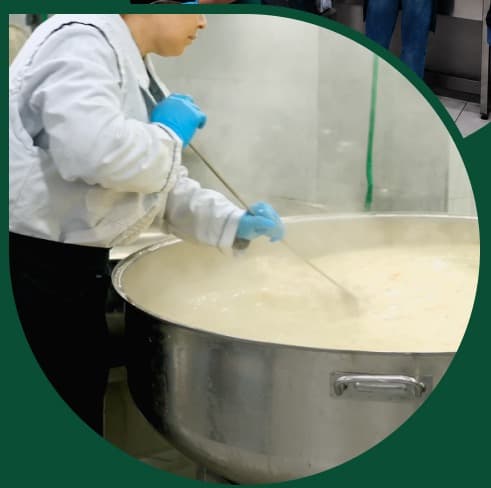
Our food is prepared in kitchens approved by Türkiye's Ministry of Agriculture and Forestry and certified for hygiene. Every stage is supervised by food engineers. Equipment is disinfected regularly, and all kitchens are inspected periodically by independent auditors. Our central production facility is certified to ISO 22000:2018 (food safety management) and ISO 9001:2015 (quality management).
Production Model01
Central Prep
Recipe-based prep* is done in the central kitchen. This is the stage that keeps portion sizes and flavor consistent across every location.
02
Final Cooking to Order
Locations handle only the final cooking, so every dish is made fresh to order. That way, the food keeps both its flavor and its nutritional value.
* Prep (mise en place): Mizanplus takes its name from the French term “mise en place,” which means having every preparation complete before cooking begins.
Staff Hygiene Procedures
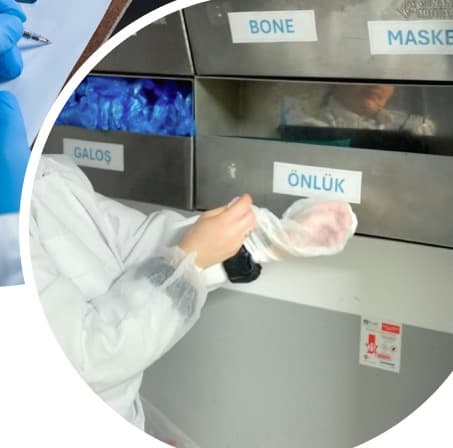
Protective gear (hairnets, gloves) worn before entering the production area
Hand washing and sanitizing procedures repeated throughout the day
Workwear reserved for the production area only
Ongoing monitoring of standards
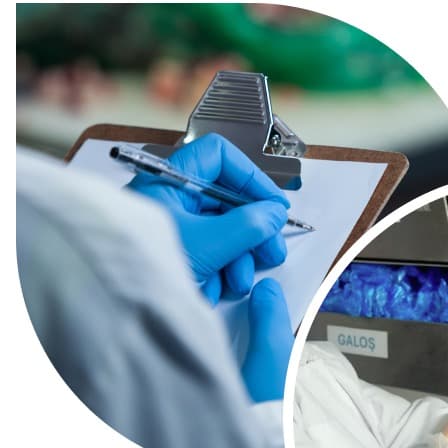
Hands-Free Portioning and Sealing
In Mizanplus kitchens, every portion is packed hands-free, in line with hygiene rules. The materials we use:
Portion Container
BPA-free and heat-resistant, so it is safe in contact with hot food.
Sealing
Closed with leak-proof film to help prevent spills and contact with outside contaminants in transit.
Protective Atmosphere
Oxygen inside the pack is reduced to create the right gas balance for the product, preserving freshness and food safety.
Hands-Free Portioning
Food is portioned without being touched by hand, keeping direct contact between production and packaging to a minimum.
MAP is a packaging method that extends shelf life by adjusting the composition of the air inside the pack to suit the product. The oxygen in normal air speeds up spoilage and discoloration in many foods; with MAP, the gas mix inside the pack is tailored to the product, which slows this process down.
What it means for you: your food arrives closer to how fresh it was when it left the kitchen. The method makes a real difference for home-style dishes, where temperature, texture, and freshness matter most.
How Does Your Order Reach You?
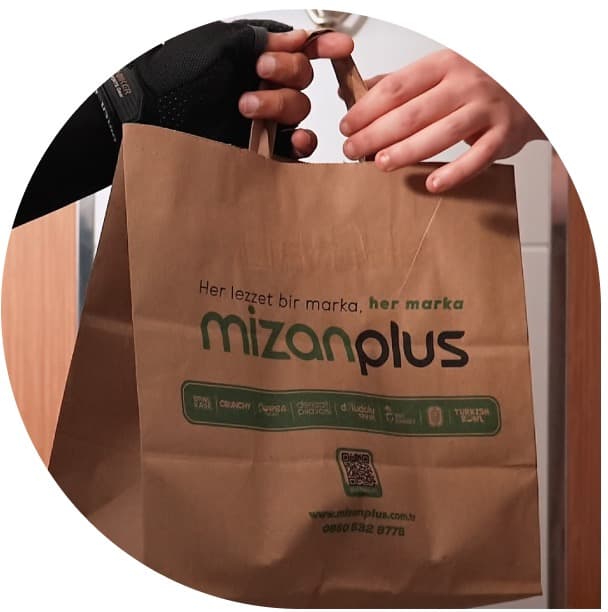
Food safety doesn't stop at the kitchen door. During delivery, professional couriers use insulated delivery bags that keep orders at temperature, contactless delivery is available, and delivery performance is measured and improved on a regular basis.
Professional couriers use insulated delivery bags that keep orders at temperature.
Contactless delivery is available.
Orders are delivered by food delivery platform couriers or our partners.
How Are Standards Upheld?
A standard that isn't audited is just a statement of intent.
At Mizanplus, auditing works on two levels.
Internal Audit Teams
Mizanplus internal audit teams regularly review kitchen and operational processes against our defined standards.
Independent Audits
Our kitchens are periodically inspected from the outside by independent inspection bodies. Our production facility's ISO 22000 and ISO 9001 certificates are kept valid through annual surveillance audits by an independent certification body.
Hygiene and Safety
Our team members take part in regular training programs on food safety and hygiene standards.
Operations Training
Staff receive regular training on food safety, hygiene, and customer satisfaction.
You are the final link in the food safety chain.
A few simple steps once your order arrives make sure the care taken in the kitchen doesn't go to waste.
01. Eating Right Away
- Eat hot dishes promptly once you open the package.
- Once the seal is broken, the food is exposed to the outside environment and loses heat faster.
02. Saving It for Later
- Don't leave it at room temperature. If you won't eat it now, refrigerate it promptly.
- Keep the lid on to prevent cross-contamination and odor transfer.
- Even when refrigerated, eat it within 24 hours.
- Label it with the time you received your order.
03. Reheating
- Reheat food thoroughly and evenly. Microwaves in particular can leave cold spots in the center, so stir halfway through.
- Don't reheat and cool the same portion more than once. Set aside only what you'll eat and reheat just that.
- To bring back the crunch in fried foods, an oven or air fryer works noticeably better than a microwave.
When in Doubt
If something doesn't smell, look, or feel right, don't eat it, and let us know. We'll take care of the review and follow-up.
Why Is Food Safety Different for Delivery?
In a restaurant, a dish goes from the kitchen to the table in a few minutes. With delivery, that takes longer, and there's transport in between. These two differences create three additional food safety risks:
Heat Loss
When hot food drops below its safe temperature range, the microbiological risk goes up.
Moisture & Condensation
Steam trapped in a closed container ruins texture and, in some foods, speeds up spoilage.
Package Integrity
A leaking package, or one with a broken seal, is unacceptable for both hygiene and trust.
The central production model has a structural advantage against all three risks: the process can be standardized from one place.
Rather than each individual restaurant developing its own methods, every location follows the same procedure and is audited against the same criteria.
The internationally recognized approach to food safety is HACCP — Hazard Analysis and Critical Control Points. The logic is simple: rather than monitoring every stage of production with the same intensity, you identify the points where a failure would actually create a hazard and set measurable limits there. Our ISO 22000:2018 certified food safety management system applies the HACCP principles within a management system that covers production as a whole.
Typical critical control points on a food production line include:
Receiving
Temperature and packaging integrity are checked on delivery. Anything outside the limits is rejected.
Cold storage
Storage temperatures are monitored continuously, and an alarm goes off if they drift.
Thawing
Frozen products are thawed only under controlled conditions; thawing at room temperature is not allowed.
Cooking
Bringing the product's core temperature up to the set threshold is the step that eliminates microbiological risk.
Hot holding & cooling
The time cooked food spends in the temperature danger zone is limited.
Packaging
Seal integrity and packaging suitability are the final control point.
Certified Production, Audited Processes
Our production facility in Ümraniye is registered with and approved by the Ministry of Agriculture and Forestry, and our food safety and quality management systems are certified to ISO 22000:2018 and ISO 9001:2015. The facility is run by the rules of these standards and regularly verified through independent audits. You can view every document below and download it as a PDF.
Official Registration and Approval
Issued by the Ümraniye District Directorate of Agriculture and Forestry under Law No. 5996 on Veterinary Services, Plant Health, Food and Feed.
Food Business Registration Certificate
Our Ümraniye production facility is a food business registered with the Ministry under Law No. 5996.
- Registration No.:
- TR-34-K-258573
- Issued by:
- Republic of Türkiye Ministry of Agriculture and Forestry, Ümraniye District Directorate
- First issued:
- 10.05.2023
- Last amended:
- 12.01.2026
Food Business Approval Certificate
The prepared meat mixture production at our facility is approved by the Ministry.
- Approval No.:
- 34-2448
- Issued by:
- Republic of Türkiye Ministry of Agriculture and Forestry, Ümraniye District Directorate
- First issued:
- 03.04.2026
- Last amended:
- 29.06.2026
International Management System Certificates
Issued by the independent certification body IQR International for the “production of ready meals and packaged food products”. They are kept valid through annual surveillance audits.
ISO 22000:2018 Food Safety Management System
Certifies that the food safety management system behind our ready meal and packaged food production meets the international standard.
- Certificate No.:
- FSMS-018603
- Issued by:
- IQR International Certification Services LLC
- First issued:
- 12.10.2026
- Valid until:
- 11.10.2027
ISO 9001:2015 Quality Management System
Certifies that the quality management system behind our ready meal and packaged food production meets the international standard.
- Certificate No.:
- QMS-018603
- Issued by:
- IQR International Certification Services LLC
- First issued:
- 12.10.2026
- Valid until:
- 11.10.2027
In Türkiye, food business records are open to the public. Under Law No. 5996, food businesses must obtain either a Business Registration Certificate or a Business Approval Certificate from the Ministry of Agriculture and Forestry, depending on the type of activity they carry out.
You can check this information by business name or certificate number through the Ministry’s food business lookup system.
Find the Business Details
Use the business name or, if available, its registration number.
Search the Ministry’s System
Go to the food business lookup page of the Ministry of Agriculture and Forestry.
Check the Registration Status
Confirm the business’s registration or approval status against Ministry records.
Mizanplus Certificate Numbers
- Food Business Registration No.
- TR-34-K-258573
- Food Business Approval No.
- 34-2448
- ISO 22000 Certificate No.
- FSMS-018603
- ISO 9001 Certificate No.
- QMS-018603
You can check our Ministry records in the Business Inspection Lookup section of the Ministry of Agriculture and Forestry’s Tarım Cebimde app, and our ISO certificates by certificate number with the certification body IQR International or on IAF CertSearch.

At Mizanplus, our aim is to produce great-tasting food in hygienic environments in compliance with laws and standards, and to serve our customers in line with their needs and expectations. By staying environmentally conscious and continuously improving our quality, we aim to increase customer satisfaction, our market share, and our competitiveness.
AS AN ORGANIZATION, WE:
Meet all requirements of the ISO 9001:2015 Quality Management System and the ISO 22000:2018 Food Safety Management System.
Keep customer satisfaction at the highest level.
Put continuous improvement and development first across every department.
Ensure that all staff are aware of the food safety policy and understand their own responsibilities within it.
Apply the standards set by all relevant laws and regulations.
Organize and deliver training to build a culture of food safety and quality.
Work with a participatory, collaborative management approach that is open to internal and external communication.
Provide a healthy and safe working environment for our employees, customers, and contractors, and put the principle of continuous improvement into practice by raising our stakeholders' awareness of our management systems and drawing on their participation and support.
Continuously improve our food safety culture.
Reduce food waste.
Meet the requirements for a sustainable environment.
Our goal
To be a pioneer in the food production industry.
All of our food is prepared in kitchens approved by Türkiye's Ministry of Agriculture and Forestry and certified for hygiene. Every stage is supervised by food engineers, and the kitchens are inspected periodically by independent auditors. Our central production facility is certified to ISO 22000:2018 and ISO 9001:2015.